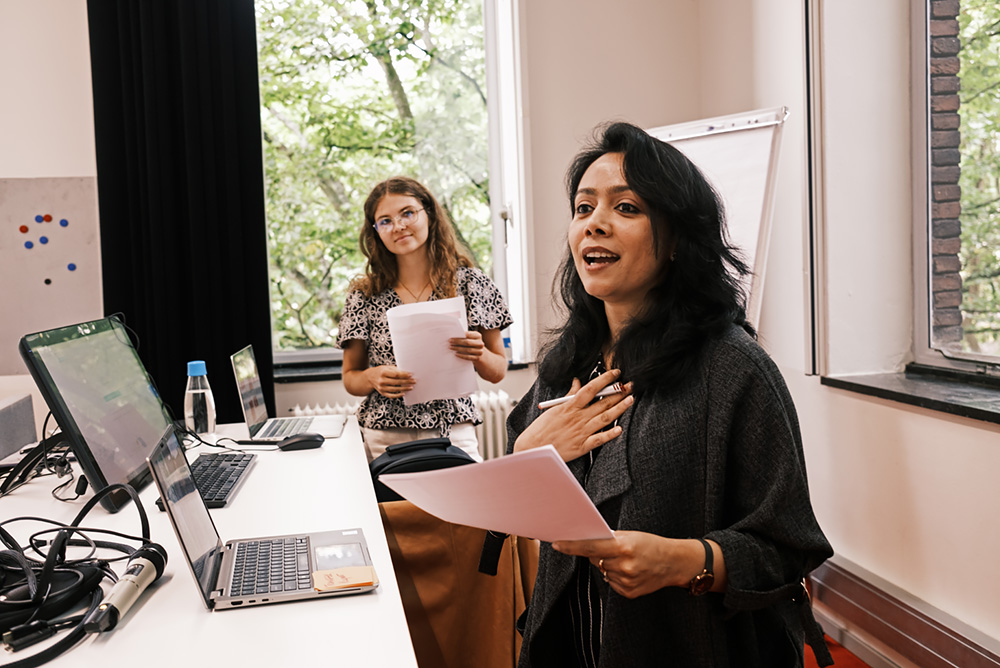
How can small and medium-sized ports contribute to a just transition within planetary boundaries? That was the focus of a policy workshop that One Planet Port organised at TU Delft on 18 September, together with PortCityFutures and the European research network COST Action PACT. In Delft, participants came from various port contexts, including Puglia in Italy, the port of Scheveningen in the Netherlands, and the ports of Lisbon and Sines in Portugal. Participants from Syria, India, Algeria, Turkey, Greece, the Netherlands, Spain, Poland and the UK, among others, joined online.
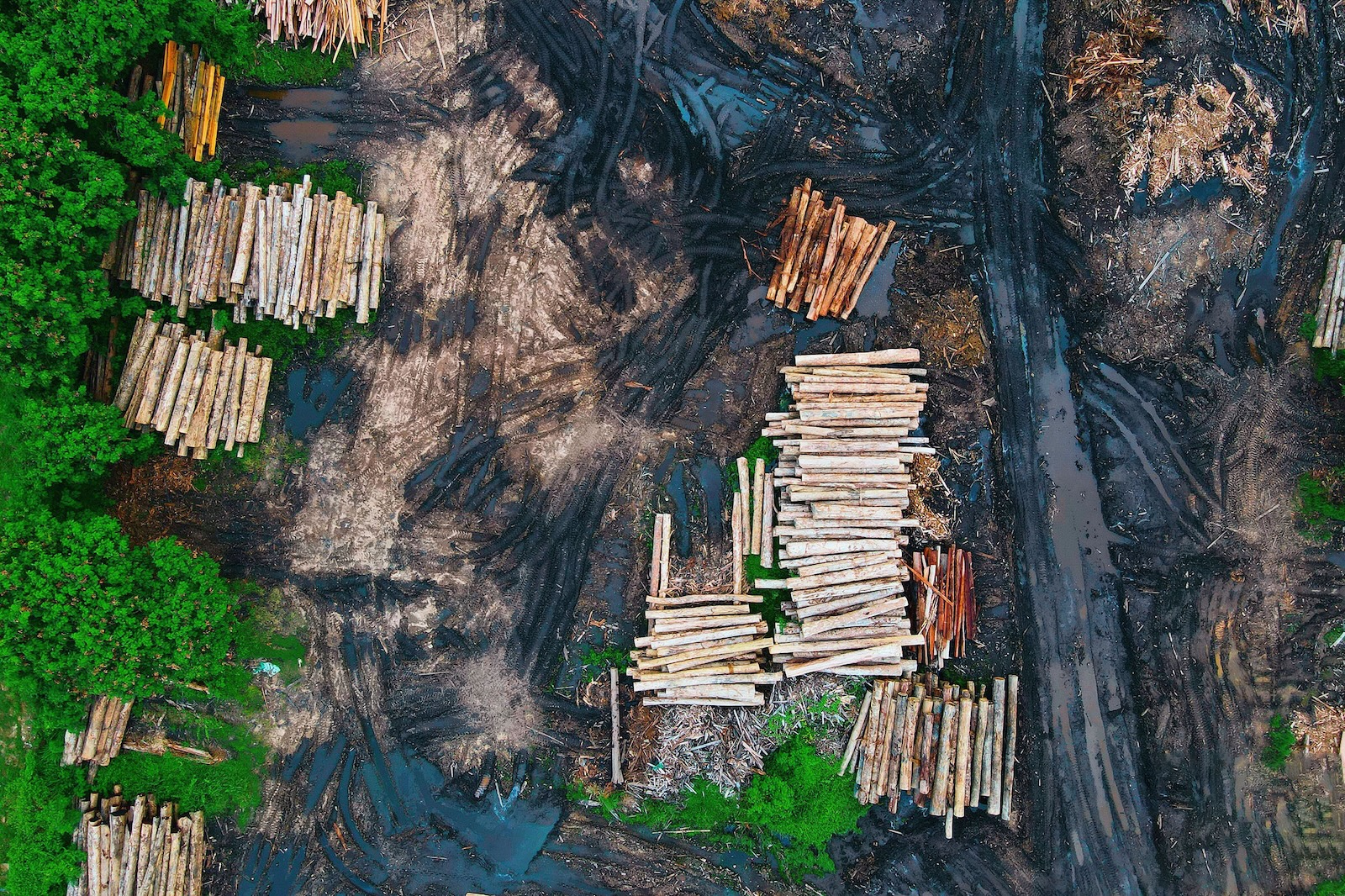
The reason: transition policy focuses mainly on the big ports, while smaller ports also have a role to play. The new EU ports strategy recognises this. Take Moerdijk. It is by no means “small” in size, but it operates in the periphery of the giant Port of Rotterdam. The Port of Rotterdam Authority lacks space and is bound by old contracts, including with fossil fuel companies (SOMO). It therefore has part of its energy infrastructure, for example for ammonia, built at nearby ports such as Moerdijk. There, industrial expansion is driving residents away. Past injustices risk repeating themselves unless we make better decisions.
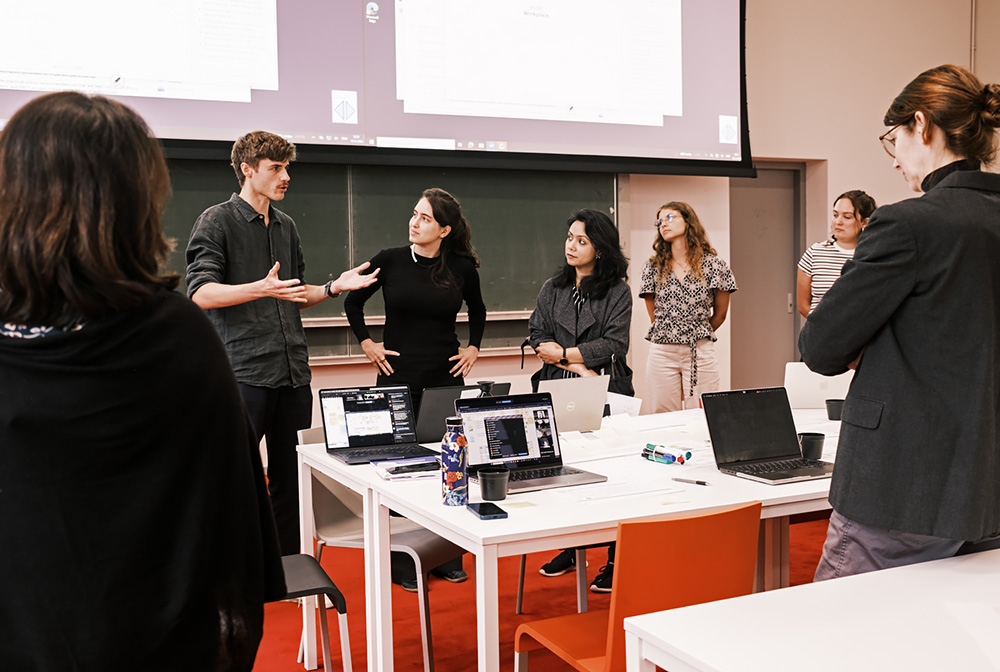
Alankrita Sarkar, Yvonne van Mil (PortCityFutures, TU Delft) and Maëlle Salzinger (One Planet Port, TU Delft) opened the workshop. Renata Costa and Sofia Morgado from COST Action PACT spoke about energy justice in Lisbon and Sines, highlighting how the costs of the transition may fall disproportionately on vulnerable residents unless policymakers anticipate. Three groups then worked on policy recommendations on the circular economy, the just transition and governance. Throughout, they looked at the relationships between ports, social justice and the planetary boundaries.
The circular economy group, facilitated by Maurice Jansen (Erasmus University), Tanner Tuttle (One Planet Port) and Yvonne van Mil, wants to make small ports the anchor of a local circular cluster and discussed setting up a pilot, inspired by the Transition Towns movement. The group also wants to make the material flows passing through the port visible, so that circular standards can be enforced. The just transition group, guided by Lukas Höller, Mila Avellar Montezuma, Renata Costa and James Brandon, proposes a port-city observatory that combines measured data with residents’ experiences. Polluting ships would also pay higher port fees, with the revenue going to the neighbourhoods that bear the burden. Maëlle Salzinger and Silvia Sivo facilitated the governance group, which pointed to fragmented governance. Transition decisions are made at EU, national or regional level, without a clear view of what they mean for nature, jobs and wellbeing around small ports. The group therefore wants mandatory citizen participation in major transition decisions, and transition plans that port authorities and municipalities draw up together.
The common thread: local impacts must carry more weight in decisions made higher up, because small ports often play essential functions for nearby residents, such as supplying food, enabling mobility (e.g., Greek islands) and providing jobs. Social and ecological risks need to be measured before, not after transition decisions are made. The recommendations will feed into the next policy brief by One Planet Port and PortCityFutures.