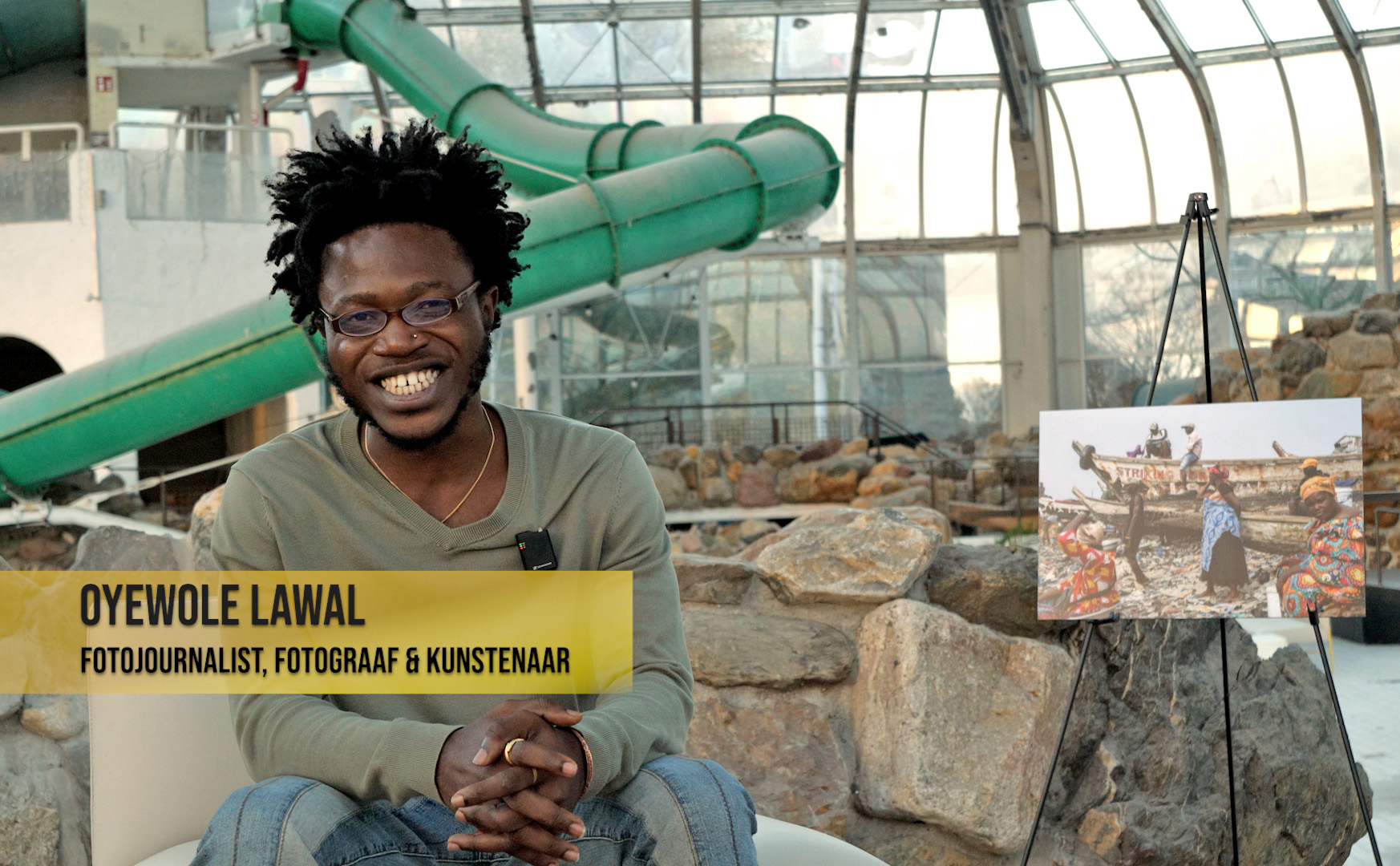
Fishermen in Jamestown, a historic fishing community in Accra, are increasingly pulling clothing from their nets instead of fish. Kinshasa Beach was once a thriving public shoreline. Now it is disappearing under discarded textiles and plastic that wash out to sea through the Korle Gono Lagoon. “It is devastating for the fish, for the fishermen’s livelihoods, for the people who live here,” says photographer Oyewole Lawal, who lived there for eight months. Diepgang gives a voice to people who take a critical look at the impact of ports and the trade that passes through them. Lawal shows where that chain ends.
The Nigerian documentary photographer came to Accra in 2024 to study at Dikan College. He settled in Jamestown, where he began his long-term project The Mourning Tide. But Lawal’s camera isn’t only on the pollution. He also photographs the fishermen, traders, waste workers and residents who carry the burden of a problem they did not create.
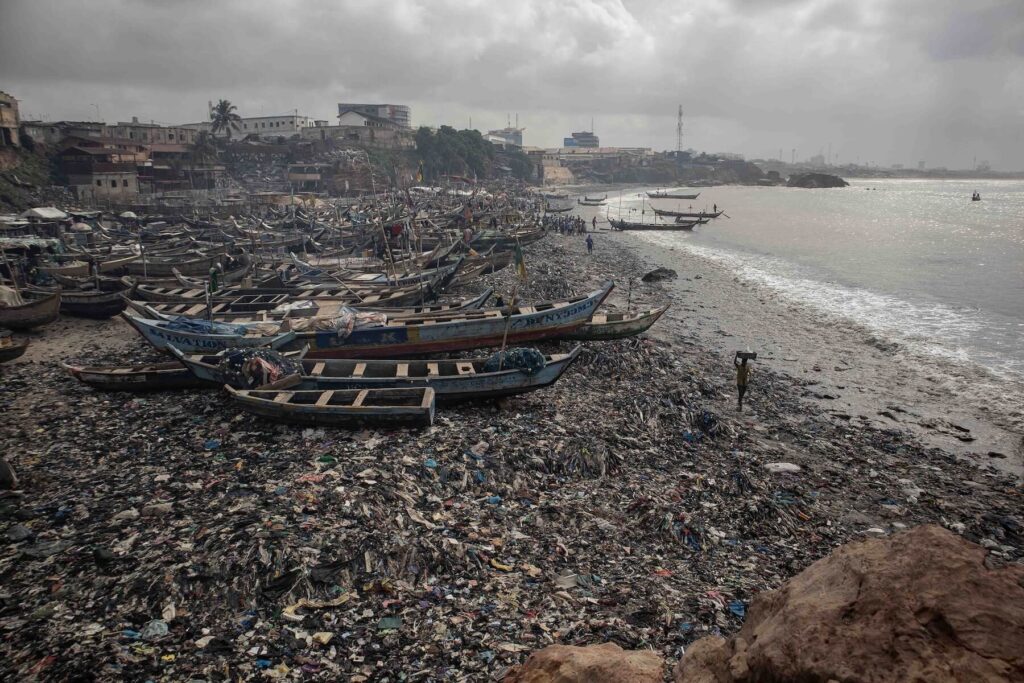
According to Lawal, around 15 million garments arrive in Ghana every week through Kantamanto Market, one of the largest second-hand clothing markets in the world. An estimated 40% of them can’t be sold and end up as waste. One Planet Port points to the role of ports in that chain. Most global trade passes through ports, and the impact reaches far beyond the port itself, from production to what happens when we get rid of things. Research by Oxford Economics shows that in 2023, almost half of the second-hand clothing imported into Ghana came directly from the EU and the United Kingdom.
Lawal’s project received an Honorable Mention for the ZEKE Award for Systemic Change 2026. On Saturday 28 November, One Planet Port is exhibiting The Mourning Tide at BlueCity in Rotterdam, during Changez: F*ck Black Friday, a circular counter-voice to Black Friday. Before this, Lawal’s work was shown in The Hague, where Art Works Projects presented his photographs during The Hague Climate Week at The Hague Humanity Hub and The Grey Space in the Middle.
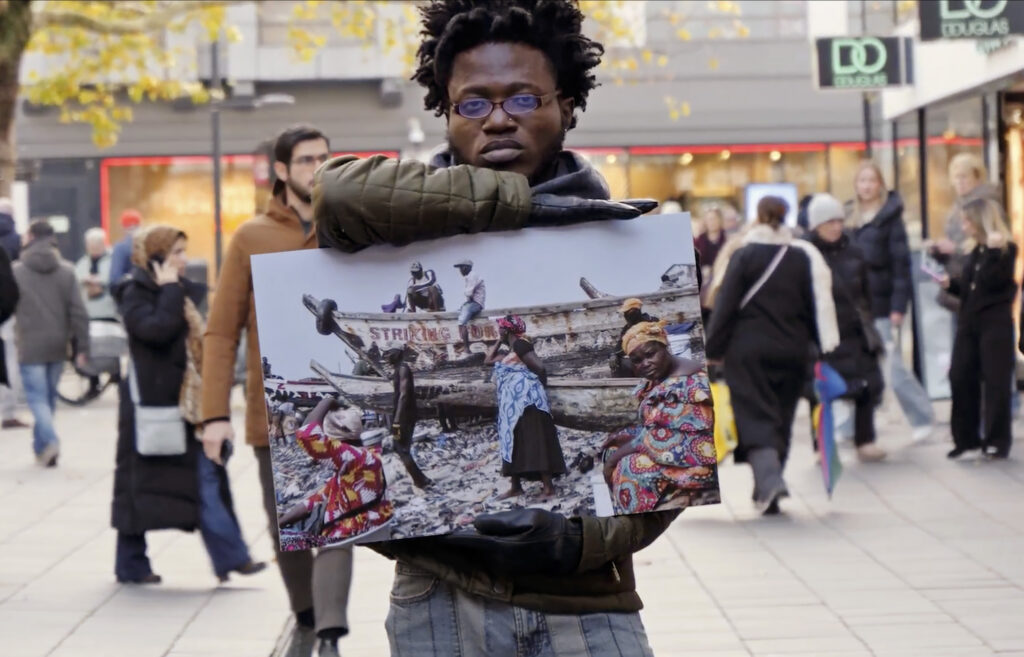
In this episode of Diepgang, Lawal talks about life on the coast of Jamestown, where fast fashion from all over the world eventually washes up. Residents and local organisations are finding creative ways to reuse the textiles, but the supply is growing faster than their solutions. Lawal has a message for anyone getting rid of clothes: “Most second-hand clothing is sent as charity. But whatever you give, give it with this in mind: I give away what I would still wear myself, not what I can no longer wear. Would you be happy to receive it as a gift yourself? What I’m really saying is: don’t send broken things to Africa.”
Film: Anne Ruijter. With thanks to Oyewole Lawal, Art Works Projects and BlueCity.