Is burning biomass to generate energy a good idea? According to the Dutch government it is, since it supports companies producing this form of ‘green power’ with billions in subsidies. But the sustainability claim is a myth, as the investigative journalism programme Zembla revealed on 10 September, in an episode about the link between energy giant RWE and deforestation in Malaysia. The idea of turning the residues and leftovers of the timber industry into energy sounds efficient and sustainable – but is that still tenable when functionally entire forests are being cut down to produce the ‘scraps’, which are then ground into pellets and shipped halfway around the world to disappear into the furnaces of RWE’s power station? Of course not.
The programme reveals how RWE found a loophole in the rules to meet the sustainability criteria via getting the felled wood certified. On paper, the pellets’ origin is the sawmill – not the whole forest felled to produce them. Additionally, the police are now investigating ‘possible irregularities and criminal offences’ in RWE’s import of biomass from Malaysia, and the Dutch Food and Consumer Product Safety Authority (NVWA) has imposed a provisional fine on the company because it cannot demonstrate that the imported wood is legal.
On Monday 14 September, the Comité Schone Lucht foundation announced its lawsuit against the Dutch state in the newspaper AD. The organisation demands that the government stop propping up biomass with billions of taxpayers’ money in the name of climate neutrality. In research together with the British organisation Biofuelwatch, Comité Schone Lucht also concluded that RWE is being creative with its records and contributes to large-scale deforestation, including clear-cutting, and risks causing flooding as a result. Let us take a step back and ask whether biomass holds up at all as a sustainable energy source when we look at the bigger picture.
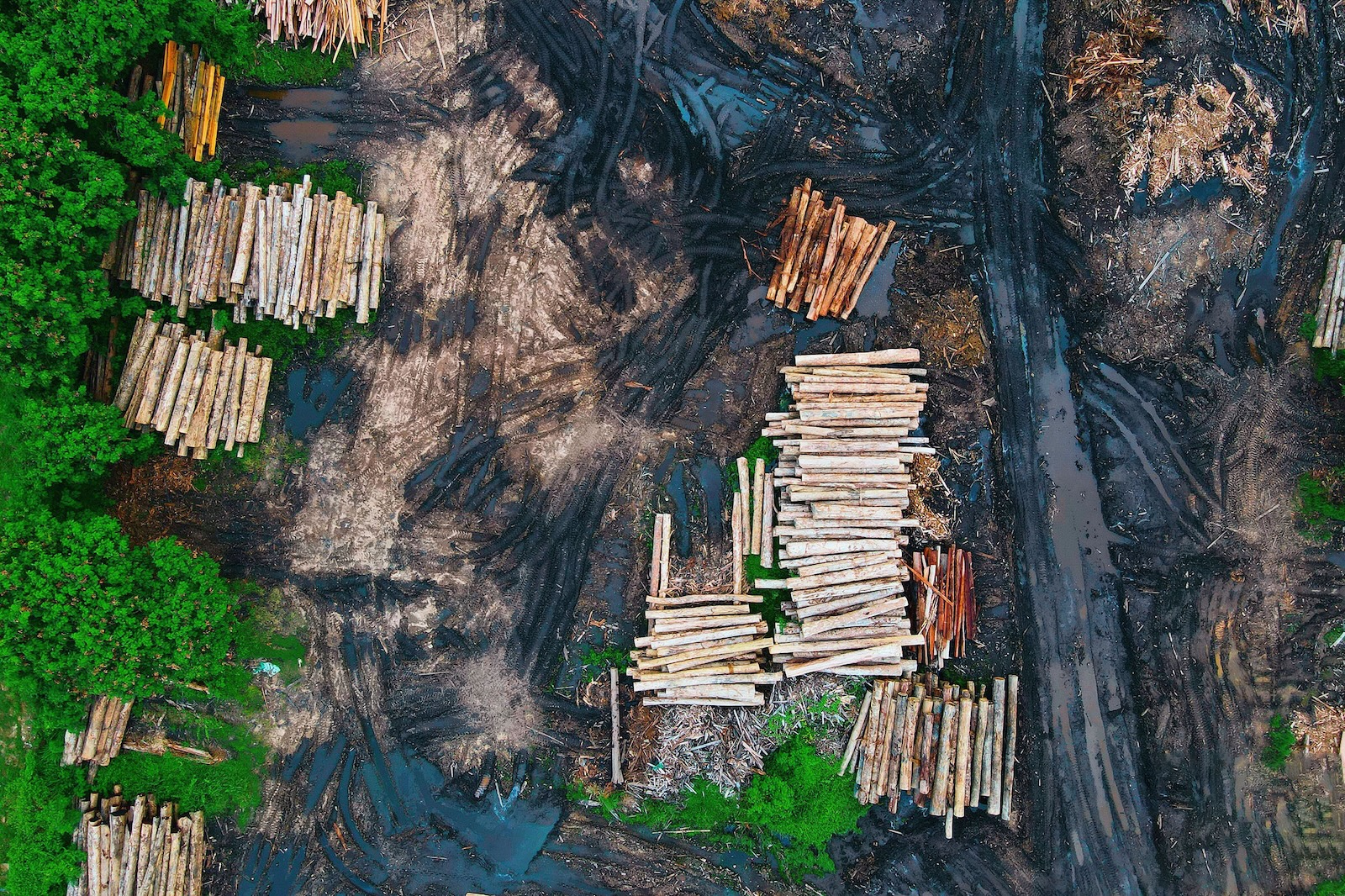
The idea behind biomass as a clean way to generate electricity rests on the assumption that burnt wood is climate-neutral, because a new tree reabsorbs the released CO₂. On paper, a closed loop – but the reality is different. A tree burnt today releases its carbon into the atmosphere now. The tree meant to compensate for it often still has to be planted, and needs decades to grow – a tropical rainforest, a century or more. And in reality, much cleared forest gives way to monoculture plantations, not rewilding, while large areas are not replanted at all. Research by the Malaysian outlet Macaranga, cited in Comité Schone Lucht’s case against the state, shows that of the more than 77,000 hectares of forest cleared in the state of Pahang between 2012 and 2020, only around 3,971 hectares were replanted. That is just over five percent.
When we look at the emissions themselves, the sustainability claim falls apart further. At the smokestack, per unit of energy generated, burning wood emits as much CO₂ as coal, or more. Thus, wood is less energy-dense and contains more moisture, so you have to burn more of it for the same amount of electricity (Sterman et al., 2018) relative to coal. The Dutch government decided to phase out coal-fired power stations because they were too polluting – yet now subsidy flows to a fuel that may be even dirtier, and for which we cut down valuable tropical forest. And then there is the journey. The wood is shipped halfway around the world on vessels burning heavy fuel oil – a sea voyage that, under the European Emissions Trading System, is only half taxed for routes originating outside the EU.
Government support for RWE ends in 2027, but the cabinet is already setting aside money to support the burning of biomass through a new package. RWE wants to capture the CO₂ released by burning wood and store it under the North Sea – a technique called BECCS (bioenergy with carbon capture and storage). On paper this produces ‘negative emissions’, but you cannot capture CO₂ from wood combustion without burning wood in the first place. So, capturing the carbon does not reduce the amount of wood that has to be burned, or cut. BECCS would scale up biomass burning rather than phase it out. Additionally, the BECCS technique is unproven at scale, a real boondoggle of a gamble.
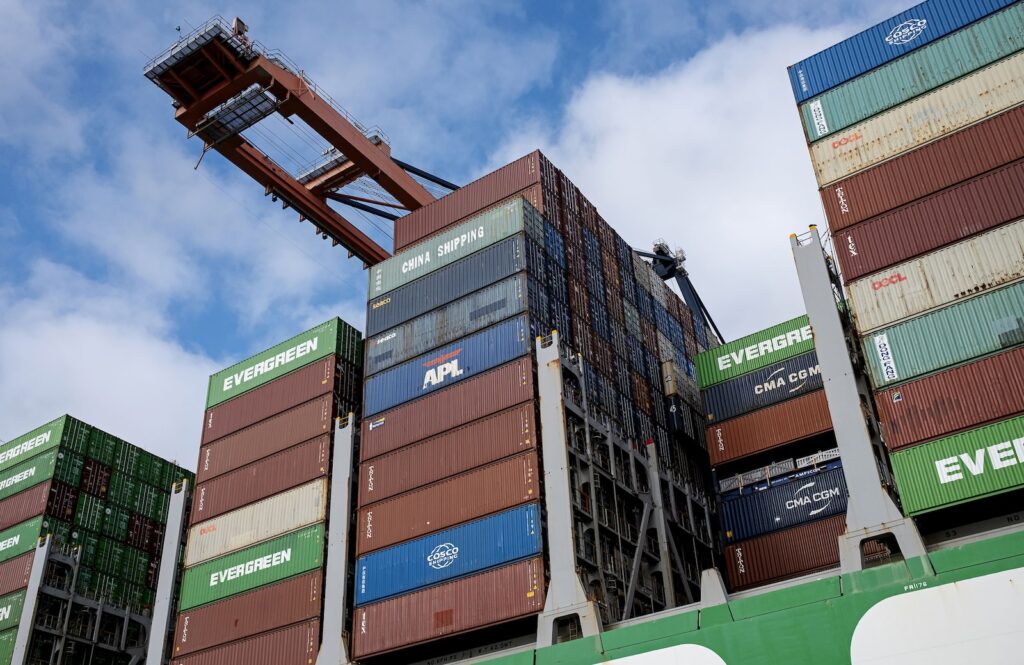
So, what is a superior alternative for Dutch society? At a time when the government is scouring for funds to plug holes in the budget, One Planet Port proposes a different use for the up to 2.5 billion euros in subsidy that RWE receives. Specifically, concrete solutions that genuinely move the Netherlands forward and halt further ecological breakdown. In our Vision Report we set out solutions that stay safely within the planetary boundaries and are scientifically grounded. We also look at the role of the Port of Rotterdam as both a link and a lever – here, the supply chain link along which the Malaysian pellets find their way to the Dutch furnaces, and thereby part of a chain that wrongly calls itself green.
One Planet Port calls on the national government, the City of Rotterdam and the Port Authority to keep building what is genuinely renewable: solar and offshore wind. They deliver the same electricity without felling a single tree or hauling it a single mile. The energy projects already under way in and around the port could together save 23 million tonnes of CO₂ a year – well over a third of the entire Dutch climate target for 2030. The technology exists: worldwide, more than a thousand ships already sail on batteries, over a hundred large cargo ships use wind propulsion to cut fuel, shore power is being installed in Rotterdam, and the infrastructure for green hydrogen is in development.
Some solutions even reverse the problem. Restoring nature on the port’s doorstep – the reed beds, tidal areas, seagrass meadows, oyster reefs and salt marshes of the delta. These ‘blue carbon’ ecosystems capture carbon naturally and hold it for centuries. Our Vision Report calls nature-based ecosystem restoration a proven climate solution up to the task of halting and reversing ecological breakdown – no technological solution comes anywhere close. The report warns that we are now wasting our money on costly, unproven techniques to capture CO₂. What is more, this approach does several things at once: it improves water quality, restores biodiversity, reduces flood risk and helps counter the acidification of coastal waters.
Precisely because the Port of Rotterdam is the gateway to Europe, Rotterdam has a part to play in the solution. The port is where it is decided what materials do and do not come ashore. And Rotterdam could take up that role more firmly, because the risk of looking away is not abstract. The city lies in a delta that already feels the consequences of exceeding seven of the planetary boundaries. In its coalition agreement ‘Vaart maken’ (‘Making headway’), the new city council sets out the ambition to make Rotterdam the strongest and cleanest port in the world, and here is the chance to match those words with action. As Europe’s largest seaport, Rotterdam faces a choice. Remain a conduit for a polluting harmful trade with a disputed green seal of approval, or become the port of the future, where the transition truly begins. It cannot be both at once.