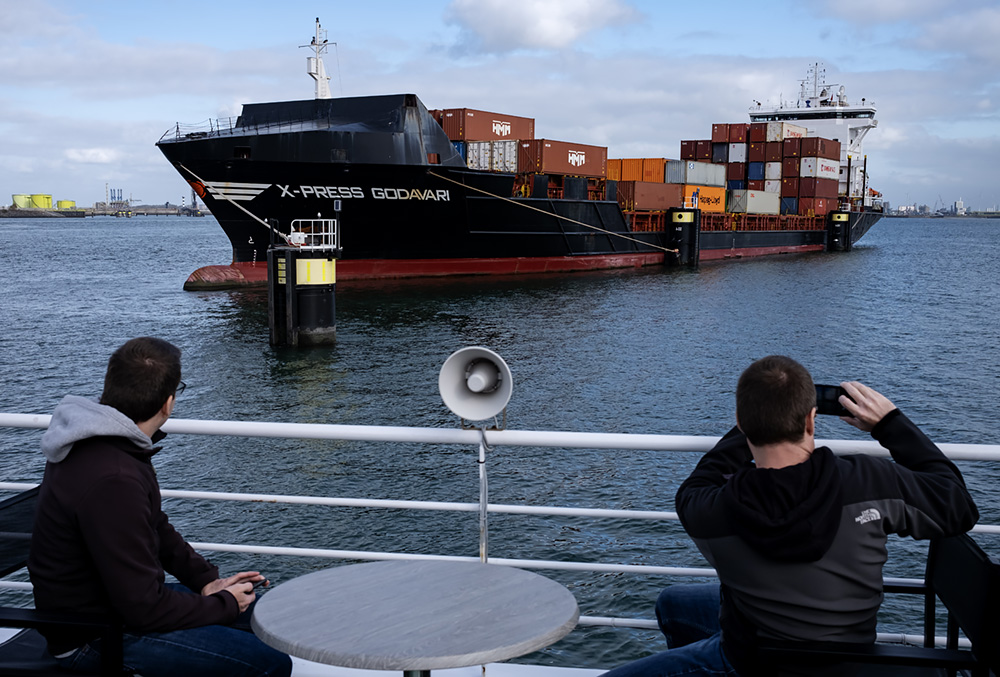
Ships that burn fossil fuel in port to generate electricity leave the bill with the people who live and work there. A new analysis by Transport & Environment (T&E) breaks that bill down port by port for the Netherlands. Together with the Clean Port Coalition, One Planet Port (OPP) is calling on the European Commission to use the review of the Alternative Fuels Infrastructure Regulation (AFIR), now under way, to deliver shore power for all ships.
Air pollution from ships causes premature deaths from lung cancer and cardiovascular disease, among other conditions, as well as childhood asthma. T&E’s figures show the scale of the damage in the Netherlands.
The Dutch figures
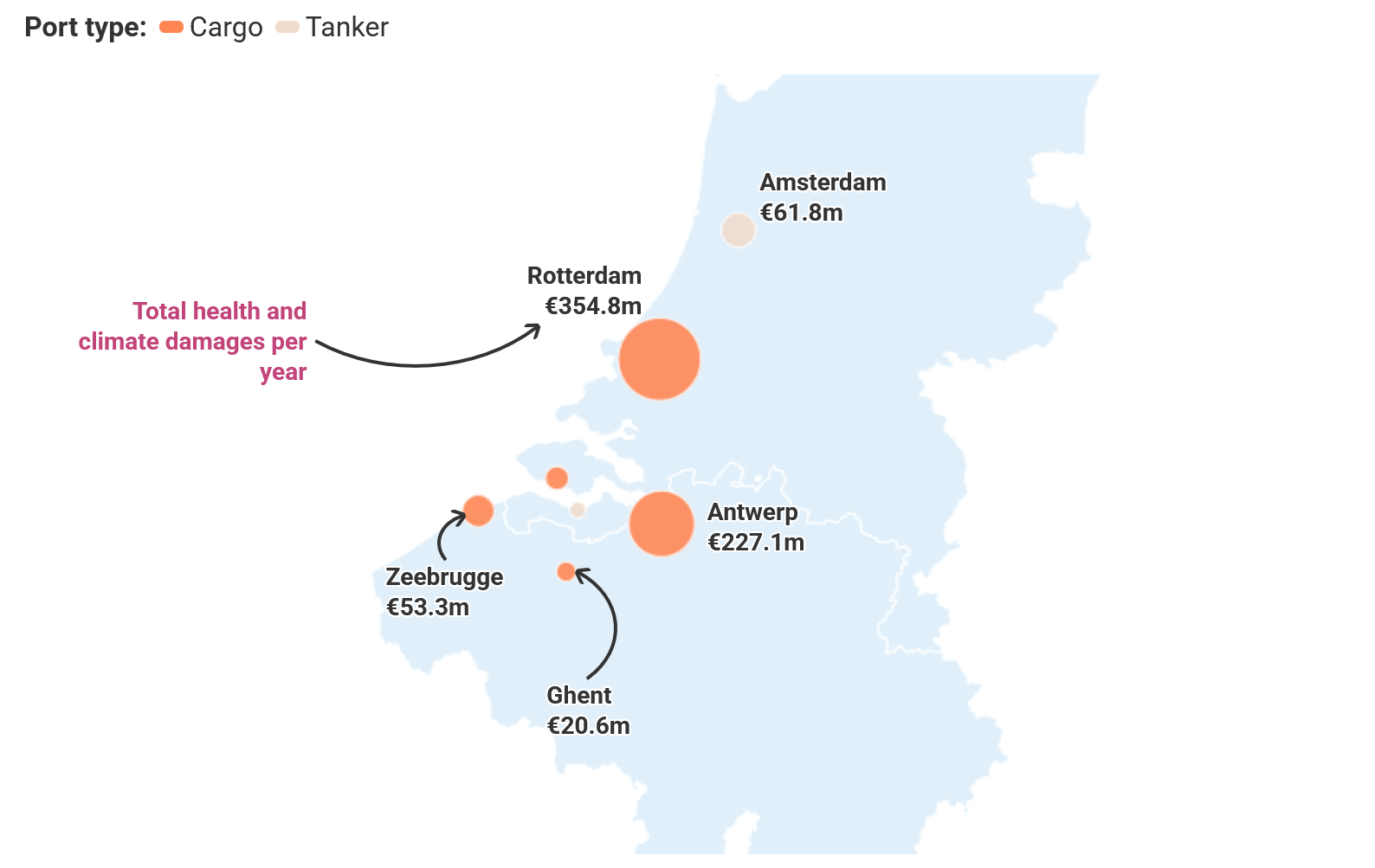
- Ships at berth cause €463 million in health and climate damage in the Netherlands every year.
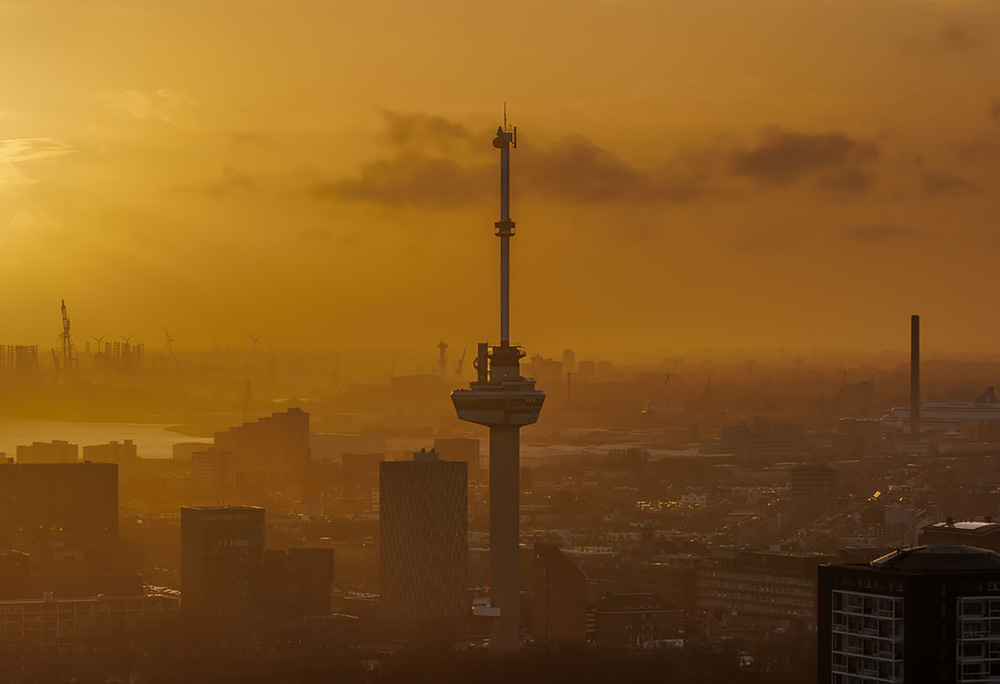
- Rotterdam accounts for three quarters of this: €350 million a year. Of Europe’s 100 largest ports, Rotterdam is where ships at berth cause the most damage, followed by Antwerp, Marseille, Hamburg and Genoa.
- Large ships (above 5000 GT) cause €339 million of Rotterdam’s €350 million; smaller vessels cause the remaining €11 million. Large ships are the size the EU’s shore power rules are designed for.
- Of that €339 million, €236 million is health damage: the cost of illness and early death caused by the pollution. That bill is paid by residents, hospitals and taxpayers, not by the ship operators.
- Yet 70% of the damage from these large ships in Rotterdam (€237 million a year) is not covered by the AFIR. Nationally, 77% of all in-port damage (€357 million a year) falls outside the rules.
- In the five Dutch ports analysed, 49% of the damage comes from cargo ships, led by container ships, and 44% from tankers. Tankers are not covered by the AFIR at all.
- On average, each of the five port cities analysed pays €60.5 million a year in health damage caused by large ships.
- Every year, ships at berth in the Netherlands emit 7,602 tonnes of nitrogen oxides, 492 tonnes of sulphur oxides, 224 tonnes of fine particulate matter (PM2.5) and 1.06 million tonnes of CO₂-equivalent, a measure that converts all greenhouse gases into the warming effect of CO₂. These emissions don’t just heat the planet. Nitrogen oxides, sulphur oxides and fine particles pollute the air people breathe, and nitrogen oxides also add to the nitrogen deposition that is damaging Dutch nature.
- Fossil fuel only looks cheap because the health and climate costs are passed on to the public. Once those costs are counted, generating power with fossil fuel on board is 2.2 times as expensive as shore power. In densely populated areas, where pollution harms more people, it is 2.9 times as expensive.
Where the rules fall short
The 2023 AFIR kickstarted shore power deployment, but it leaves major loopholes:
Ship types: only container and passenger ships have to plug in. Tankers, bulk carriers, car carriers and other cargo ships are left out entirely. This is the biggest gap.
Boilers: even ships that do plug in can keep burning fuel in their on-board boilers, which produce steam and heat. On tankers, boilers are also used to unload cargo. Boiler emissions are not covered at all.
The 10% exemption: ports only need to provide shore power for 90% of calls by container and passenger ships.
Short stays and smaller ports: calls of two hours or less are exempt, and the rules only apply to ports above a minimum number of calls.
That is why most in-port emissions remain unaddressed: tankers, bulk carriers, car carriers and on-board boilers are not covered at all. Across Europe, ships at berth cause €2.5 billion a year in health and environmental damage. Closing these loopholes would save €1.56 billion in health and climate costs. The next AFIR revision is not due until 2032, so the current review is the moment to close the gaps.
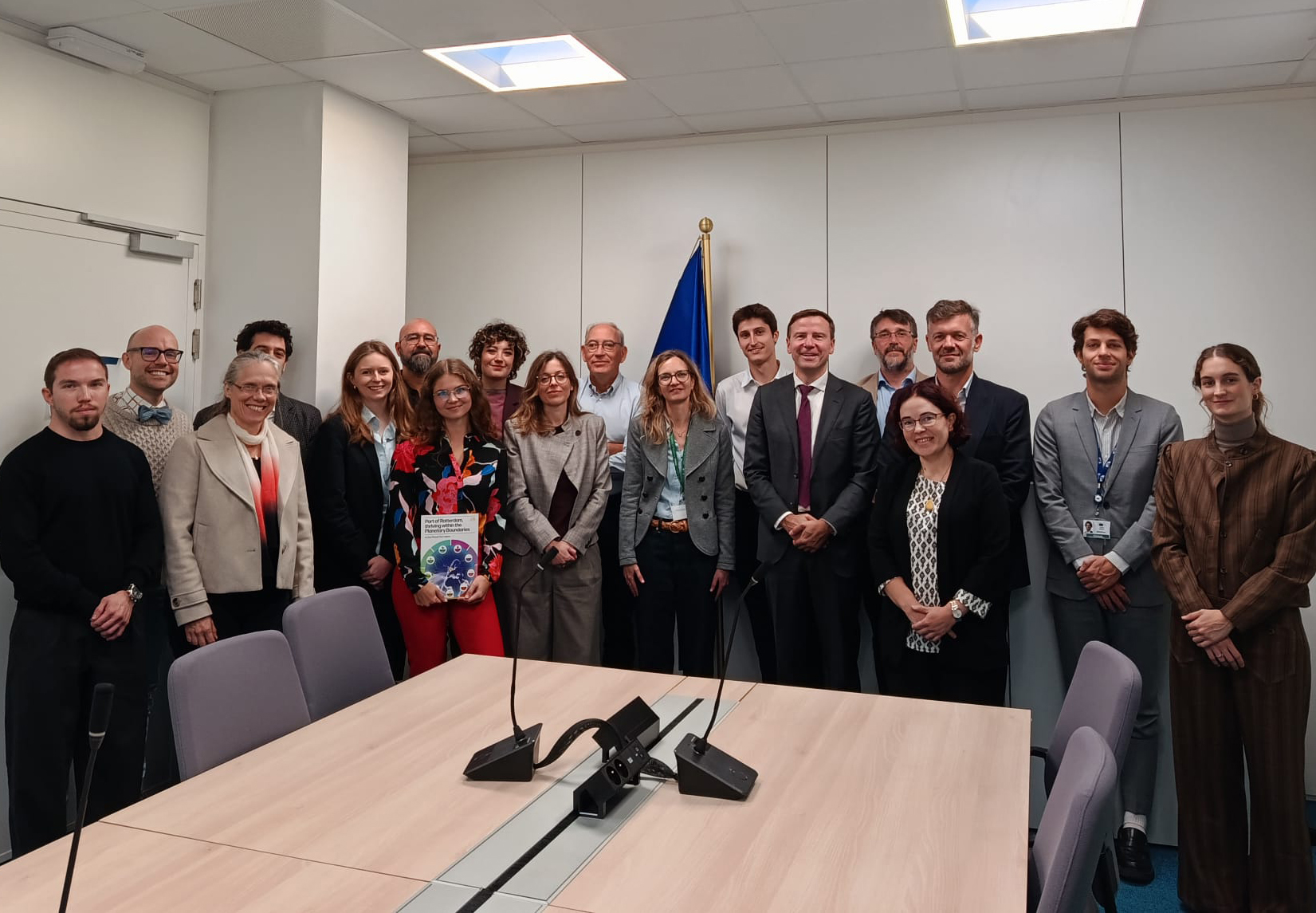
The Clean Port Coalition, an alliance of industry, civil society, and maritime and energy stakeholders, is therefore asking the Commission for a predictable long-term horizon for shore power across all vessels, battery charging infrastructure requirements for battery-electric vessels, and streamlined, prioritised grid access for ports as clean energy hubs.
‘Ports and shipping are not on track to halt and reverse climate change,’ says Maëlle Salzinger, Policy and Academic Relations at OPP. ‘Decarbonisation based on fuel substitution, carbon capture and selective shore power is nowhere near enough. OPP, through the Clean Port Coalition, calls on EU policymakers to make electrification a top priority and cut harmful emissions in port-cities. This will send a strong message to those living and working in ports: they must no longer bear the health costs of shipping’s unsustainable growth.’
At least 63% of ultrafine particles emitted in Rijnmond come from shipping
Regional figures don’t tell the whole story. That is why residents taking part in Right to Breathe, OPP’s citizen science initiative, measure ultrafine particles along their own daily routes.
What are ultrafine particles?
Ultrafine particles (UFPs) are around 1,000 times thinner than a human hair. They are mainly released when fuel is burned. Because they are so small, they can pass from the lungs into the bloodstream and reach other organs, including the brain, and the body is slower to clear them than larger particles. Yet there is no legal limit for UFPs in the Netherlands.
‘In port cities like Rotterdam, shipping emissions are a daily health reality,’ says Romy Zhang, Project Coordinator and Support for Right to Breathe at OPP. ‘According to 2019 DCMR data, shipping drives at least 63% of ultrafine particle (UFP) emissions in the Rijnmond region. Through our Right to Breathe citizen science initiative, residents add to this data by measuring UFP across their daily routes and routines. This catches local spikes that add neighbourhood-level insight to regional figures, tracking these particles small enough to enter our lungs and bloodstream. Every vessel still burning fossil fuels at berth adds to a preventable public health burden in the Netherlands and across Europe. An ambitious AFIR review that mandates widespread port electrification and shore power is more than just an industrial upgrade; it’s essential to protecting port communities’ fundamental right to clean air.’

Find out more about Right to Breathe and how to take part: righttobreathe.eu
Sources: T&E, The true cost of in-port emissions and Clean Port Coalition letter (November 2026). The national total and the Rotterdam total of €350 million include smaller ships; the other port figures cover only ships above 5000 GT. Ultrafine particles: Visschedijk and Denier van der Gon, UFP emissies in de Rijnmond regio in 2019, TNO for DCMR (2022). RIVM, Ultrafijnstof (rivm.nl/ultrafijnstof). Health effects: Sofiev et al., Cleaner fuels for ships provide public health benefits with climate tradeoffs, Nature Communications (2018). Boilers: US EPA, Shore Power Technology Assessment at U.S. Ports.