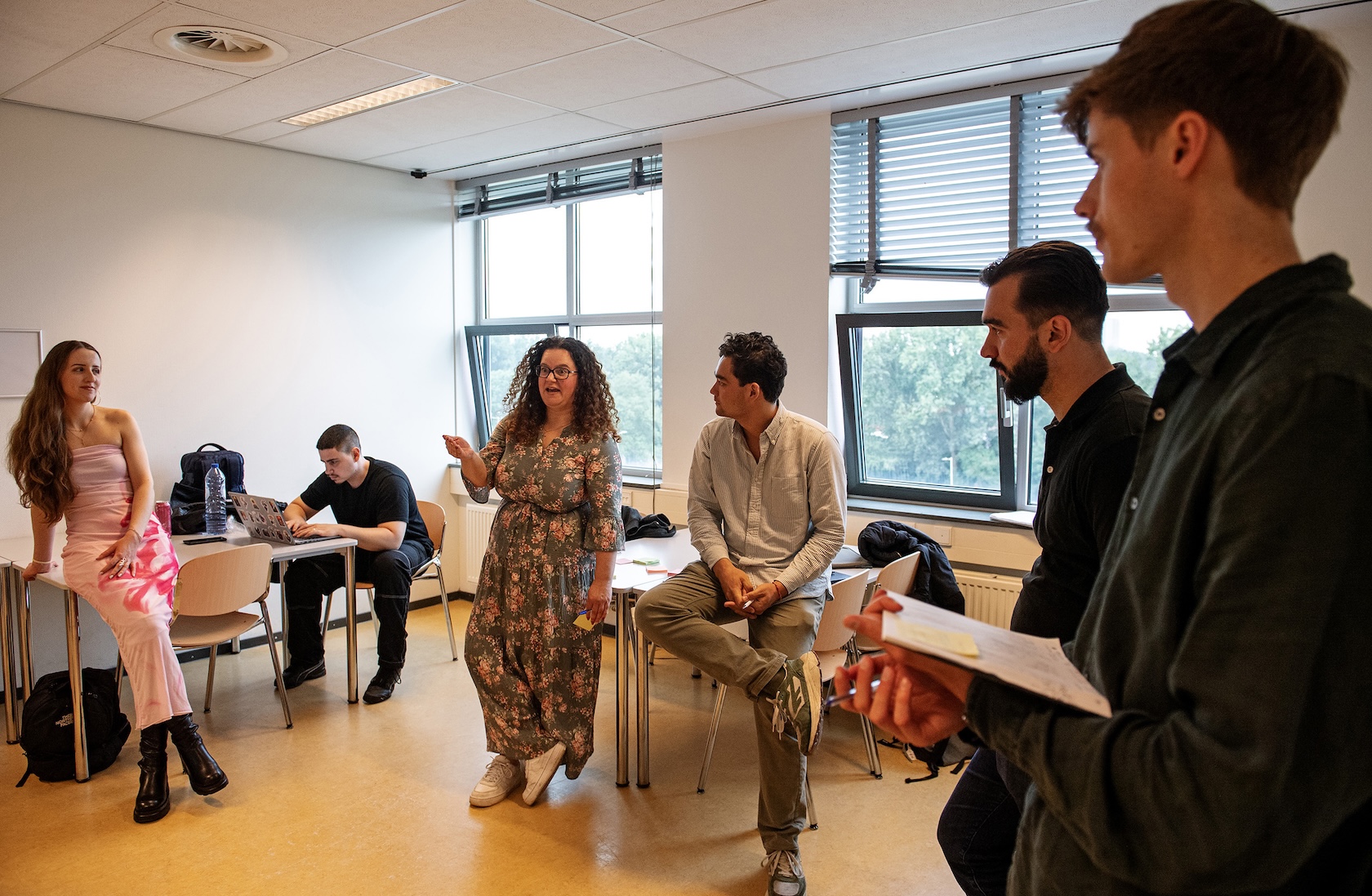
Who sets the course of the port’s energy transition? That question was at the heart of the graduation project of five Master’s students from Erasmus University Rotterdam: Anton Driessen, Elena Kuznetsova Kifulyak, Lucio Cardozo Morales, Thaïs Gaillard and Roan But. For the Master Societal Transitions programme, connected to transitions institute DRIFT, they carried out action research with One Planet Port as their societal partner.
Their point of departure: the Port of Rotterdam wants to become climate neutral, but remains deeply entangled with fossil fuels. OPP wants real system change, not small improvements, and a port that operates within ecological limits. But who actually sets that course? And where can an organisation like OPP make a difference? The students set out to find just that: who should OPP turn to – and how – to move the port away from fossil fuels?
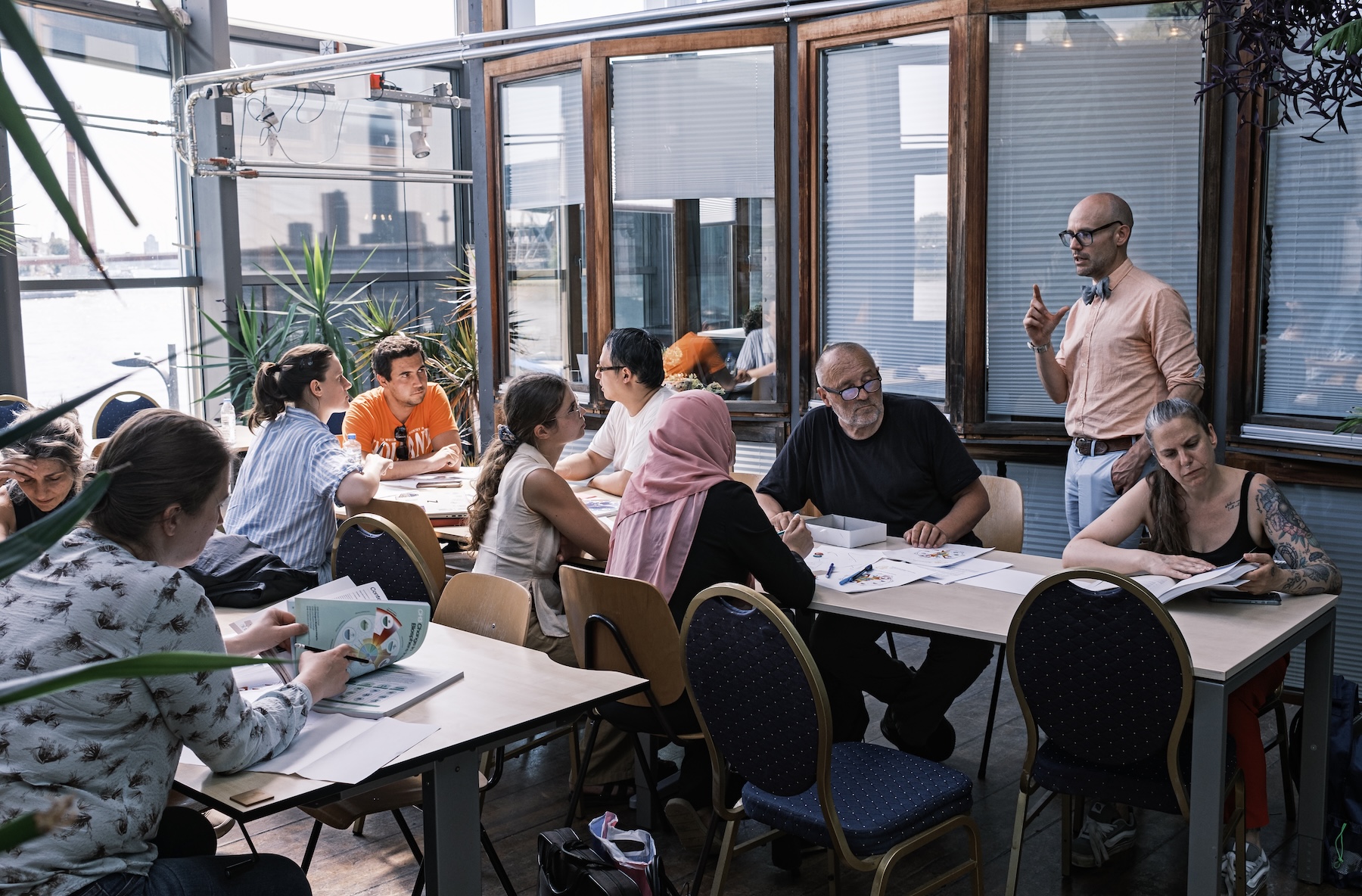
The students dug into policy documents and spoke with people who know the port from the inside. They mapped who has a say in the port – officially and behind the scenes: from the Port Authority, the municipality and the Dutch State to companies, investors and land lease contracts. The capstone was a workshop on 16 June at the Erasmus University campus, where the students brought together OPP and their interviewees to discuss what is holding the transition back, what could help and which routes look most promising to change.
This delivered two concrete results: an interactive map showing who can drive system change in the port, how parties relate to each other and where there is room for influence. And a tested workshop format that OPP can use again with other parties.
The key insights: the Port Authority is central, but it does not decide its fate alone. Public ownership matters – as shareholders, the City of Rotterdam and the Dutch State are important entry points. The conclusion is that for OPP, the best opportunities to achieve system change lie in lease conditions, shareholder influence, public funding and building coalitions.
The recommendations follow from this: find allies in politics – from city council to the Ministry of Economic Affairs – use the map wisely, repeat the workshop with new parties and work with people inside organisations who want to break with business as usual to achieve a livable thriving future.
On 22 June, the students completed their graduation project with a final presentation at the OPP office. As they define in their own words: their research is a grain of sand in changing the system – but also a tool OPP can put to use immediately. Our thanks go out to the students for their fresh eyes and thorough work and Julia Wittmayer, professor at Erasmus University Rotterdam and senior researcher at DRIFT, for supervising.